Question 1: Not what is sleep, rather, WHY DO WE SLEEP?
It has multiple functions:
- Improved brain functions; memory and the ability to learn.2
- Psychological health benefits.
- Refuels the immune system.
- Appetite control, as well as gut bacteria maintenance.
- Lowering blood pressure and reducing stress on the cardiovascular system.
Question 2: WHAT happens if we don’t sleep?
A lot of health issues start appearing:
- A 2-to-3-fold risk of type 2 diabetes mellitus by just delaying 1 hour of the routine sleeping pattern.3
- A 1-hour increase in variability in sleep onset timing was associated with a 25% risk of central obesity.
- Shift workers are at a 20% higher CVD (cardiovascular disease) death risk for every additional 5 years of exposure, implying that the risk increases rapidly with each passing year.
The hard truth
We become unhealthy and live shorter lives due to a lack of sleep.

Question 3: What are the stages of sleep?
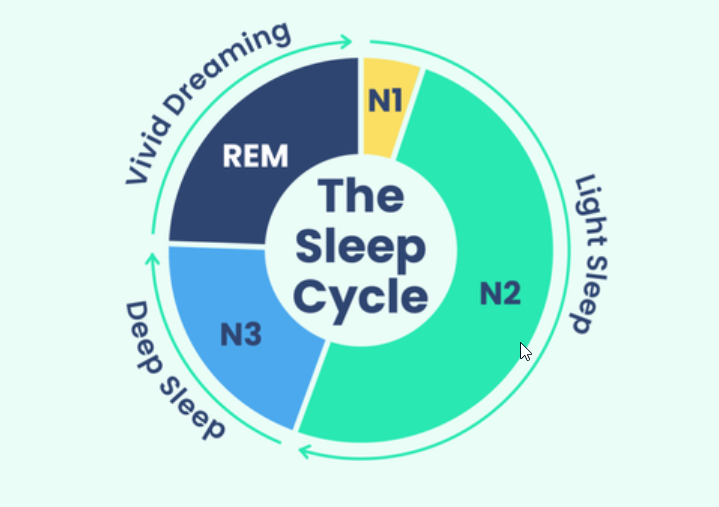
- N 1 “Nodding off”, the lightest stage of sleep; the transition from wakefulness.
- N 2 Decreased heart rate and metabolism. Your body temperature drops and eye movement stops.
- N 3 Lowest heart rate and muscle activity, the deep, restorative sleep your body needs most.
- REM Dreaming sleep, vivid, memory-consolidating, emotionally regulating. This is where the magic happens.
Question 4: How do we miss out on sleep?
- By getting less sleep and having lower-quality sleep.
- By disrupting the timing of when sleep begins.
Question 5: How do we get it wrong?
By knowing what we are doing wrong, we will know how to do it RIGHT. Ever heard of sleep hygiene?
Sleep Hygiene · Dr. Foldvary-Schaefer
“Sleep hygiene is essentially the prep work we can do to protect our sleep and ensure that we sleep well.”4
So the question finally becomes: what NOT to do?
- No late-night screen time.
- No caffeine consumption prior to sleep time.
- No late-night snacking.
- No alcohol consumption.